

Glasswing: The Move Toward Transparent Security
Anthropic launches dedicated AI cybersecurity initiative Glasswing
Apr 10, 2026, 10:00
Announcement
Anthropic launches dedicated AI cybersecurity initiative Glasswing
Category
AI-driven security/emerging platform shift
Risk Type
Market disruption/security model transformation
Potential Impacts
Redefinition of AppSec, DevSecOps, Security ownership models
The Announcement
Anthropic didn’t just release a feature.
They exploded onto the security scene - and redefined the category.
Anthropic has dropped a bombshell in the software security landscape. Enigmatically named Glasswing, it is a collaborative cybersecurity initiative that signals a fundamental shift in how security will be approached within AI-driven systems.
At its core, Glasswing represents a shift toward AI systems that analyze vulnerabilities, reason about risk, and potentially assist in remediation - not as passive tools, but as live actors within the security lifecycle.
With Glasswing, Anthropic is signaling something bigger than incremental improvement. This is AI moving from being something we secure - to something that actively participates in security itself. In this model, AI moves beyond being a tool and becomes part of the security workflow itself.
Backed by major players in big tech, Glasswing reflects a broader movement toward intelligent, adaptive security systems that can identify, understand, and respond to risk in real time. This includes analyzing vulnerabilities in context, reasoning about their impact, and supporting remediation decisions.
Why It Matters
This changes the rules of the game.
If AI can meaningfully participate in security, then the value of traditional tools starts to erode. Detection alone is no longer enough. Volume is not an advantage. In fact, it’s a liability. The problem is no longer finding vulnerabilities. It’s understanding which ones are worth acting on.
And right now, that’s where most tools fail. They generate output, but they don’t provide direction. They surface risk, but they don’t prioritize it in a way that aligns with how systems actually run. As AI enters the workflow, that gap becomes impossible to ignore.
We’ve already seen how easily things can slip through when architectures get this complex. Not because teams don’t know what they’re doing, but because modern pipelines are operating at a scale that’s hard to reason about manually. At that point, human oversight isn’t enough.
You need systems that can actually understand what’s going on, interpret that knowledge into clear, actionable insight and communicate it seamlessly as a game plan for teams to execute.
What This Reveals
For years, application security has been built around detection. Find the issue, assign severity, move on. In theory, that works. In practice, it creates noise.
Teams today are flooded with alerts, but very little clarity. Everything looks important, which means nothing actually is.
Glasswing challenges that model. It points toward systems that don’t just detect risk but interpret it. Systems that understand context, not just code. Systems that can answer a far more important question: does this actually matter here?
This is the real shift. Not more intelligence in detection, but intelligence in decision-making.
What Teams Should Watch
Security teams need to shift how they evaluate their stack. It’s no longer about how much you can detect. It’s about how well you can decide.
That means asking harder questions. Are we prioritizing risk based on real impact or generic scores? Are our tools being applied to reduce noise or amplify it? Or the larger question of whether security can seamlessly integrate into development or become a roadblock that slows it down.
Are we prepared for AI-driven systems, or still optimizing for static ones? Because the future is not more alerts; it’s fewer, high-fidelity alerts over busy background noise.
Where Moole Fits
Glasswing doesn’t introduce a new problem. It makes an existing one impossible to ignore
At Moole, the focus has always been on cutting through noise and bringing clarity to risk. Not just identifying vulnerabilities but understanding them in context and prioritizing what actually matters.
Because in a world where AI participates in security, the winning platforms won’t be the ones that find the most issues. They’ll be the ones that make sense of them.
Moole operates at that layer. Across code, dependencies, and containers, it turns raw security data into clear, actionable signal that teams can actually use.
The Bigger Shift
Glasswing is not just an announcement. It’s a signal.
Security is moving away from static tools and toward adaptive systems. Away from detection and toward reasoning. Away from volume and toward precision. That shift is already underway. Glasswing just makes it visible.
Final Thought
AI isn’t just expanding the attack surface. It’s changing how security decisions are made. The question is no longer whether AI will be part of cybersecurity. That’s already happening.
The question is whether your security stack is built for a world where intelligence, not volume, defines value.
Table of Contents
Related Blogs

The Trust Layer Is the New Attack Surface
May 19, 2026
IncidentCoordinated attacks targeting trusted infrastructure layers across identity systems, edge appliances, and open-source ecosystems
Risk TypeAbuse of implicit trust relationships
The Death of Bolt-On Security
May 19, 2026
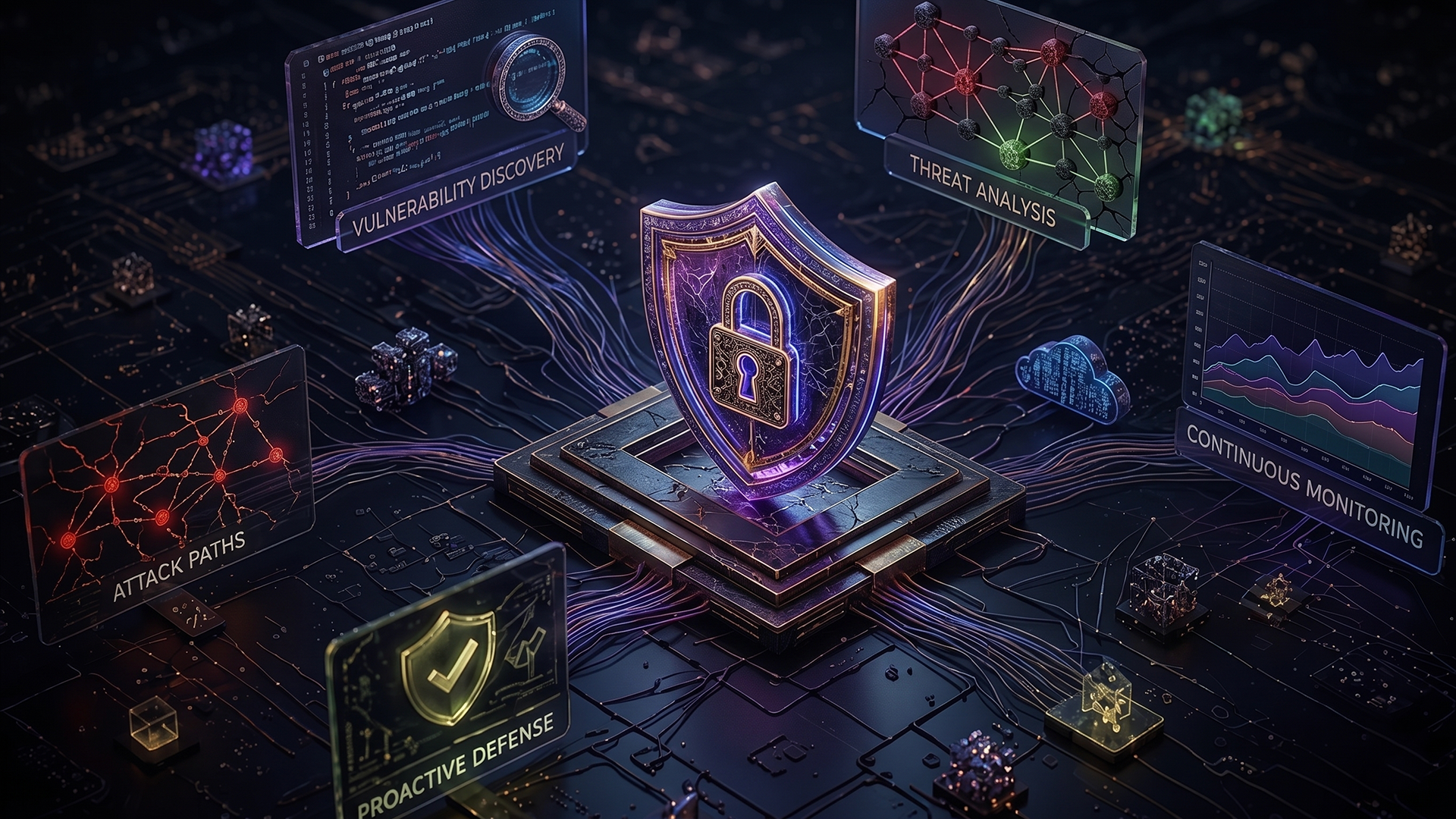
IncidentThe latest shifts across Google, Apple, AI platforms, and cloud infrastructure point toward a future where security is no longer a separate layer added as an after-thought but build directly into the operating fabric of software itself, as a part of how systems fundamentally operate.
Risk TypeTraditional perimeter and bolt-on security models losing effectiveness in modern environments

When Breaches Cascade in Chain Reaction Chaos
May 19, 2026
IncidentModern breaches no longer stop at the initial compromise — they cascade across authenticated sessions, dependencies, cloud infrastructure, automation CI/CD pipelines, trusted browser extensions, and interconnected software systems long after the initial compromise occurs, and faster than security teams can react.
Risk TypeSingle-point compromises triggering downstream compromise amplification across trusted operational environments

Aftershocks: Google’s Kernel-Level Security Shift
Apr 13, 2026
ObservationSurge in security-focused releases across Google products
Signal TypeStrategic product shift

The Day The Codebase Escaped
Apr 1, 2026
IncidentAccidental exposure of internal AI codebase via build artifact
Risk TypeIntellectual property exposure/architecture leakage

Apple Fixes Exploited Zero-Day Affecting iOS, macOS, and Other Devices
Mar 9, 2026
IncidentApple patches actively exploited zero-day vulnerability
Risk TypeZero-day exploitation in widely deployed devices
Critical BeyondTrust RCE Flaw Now Exploited in Attacks
Mar 9, 2026
IncidentExploitation of BeyondTrust Remote Support / Privileged Remote Access vulnerability
Risk TypePre-authentication remote code execution (RCE)

The Edge Is the New Frontline: Lessons from the Cisco SD-WAN Exploits
Mar 5, 2026
IncidentActive exploitation of Cisco SD-WAN vulnerabilities
Risk TypeEdge control-plane exploitation

Beyond MFA: How Attackers Are Winning the Identity Game
Mar 5, 2026
IncidentCredential abuse campaigns bypassing MFA
Risk TypeAuthenticated session takeover